
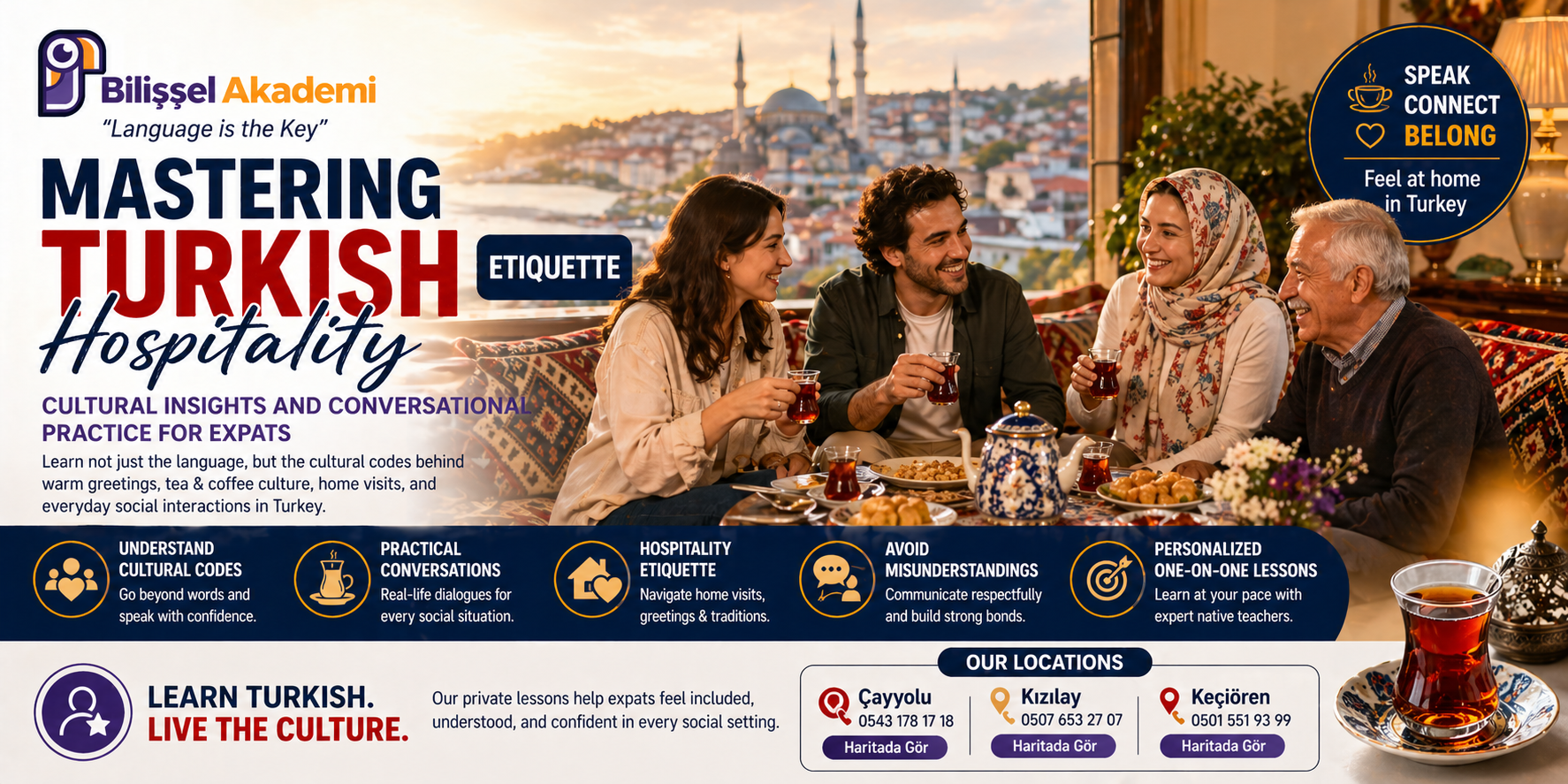
🧿 An In-Depth Exploration of Turkish Culture:
Traditions, Etiquette, and the Unwritten Rules of Social Life
Moving to Turkey is an exciting adventure, but adapting to life here requires more than just learning vocabulary and grammar. Turkish hospitality is a memorable and beautiful aspect of life in the country, yet it can sometimes feel confusing for expats unfamiliar with the underlying cultural codes.
Why does a neighbor invite you for tea after only a five-minute chat? Why do hosts keep offering food even after you say you are full? In Turkey, understanding the unwritten rules of social life is essential for avoiding misunderstandings, building genuine trust, and forming strong relationships in your community and workplace.
This definitive pillar guide explores the core elements of Turkish culture. From the intricacies of home visits and hospitality to the rituals of tea, coffee, and holiday traditions, we will decode the social etiquette you need to move from being an “outsider” to a comfortable, culturally aware guest.
The Heart of Turkish Culture: Hospitality (Misafirperverlik)
Hospitality is deeply embedded in Turkish social life and is based on generosity, respect, care, and relationship-building. It is not limited to family or close friends; you will experience it in workplaces, shops, neighborhoods, and classrooms.
The Abundance of Food
Hosts want their guests to feel valued and comfortable, which is why meals are abundant and visits often last longer than expected.
Repeated Offers
Repeated offers of food or drinks are common. While a first refusal may be interpreted as hesitation or modesty, repeated offers are simply a way for the host to ensure the guest truly feels welcome.
The Hidden Message
Hospitality communicates deep cultural messages like “You are welcome here” and “This relationship matters to us.”
The Unwritten Rules of Turkish Home Visits
Being invited to a Turkish home is a meaningful sign of friendship and trust. To navigate these visits comfortably, certain etiquette must be strictly observed:
- Before Arriving: It is polite to confirm the visit time and avoid arriving too early. Punctuality is appreciated, but slight delays are usually tolerated.
- Gifting: Bringing a small gift, such as dessert (baklava), chocolates, flowers, or an item from your home country, is highly appreciated for a first visit. Never arrive empty-handed.
- At the Door: Guests are strictly expected to remove their outdoor shoes at the entrance. Hosts will often provide guest slippers (terlik) for you to wear inside.
- During the Visit: Greet everyone warmly upon arrival and use polite language, especially with elders. Complimenting the home and the food is highly encouraged.
- Leaving: It is considered impolite to leave immediately after food or drinks are served. Ensure you thank the host sincerely before departing.
☕ Turkish Tea (Çay)
Tea is a universal symbol of hospitality, served in homes, offices, schools, and markets. It is the lifeblood of social interaction.
- Accepting tea is a simple and effective way to show openness to conversation and participate in social life.
- It offers a low-pressure environment to practice language skills and build trust with neighbors or colleagues.
🏺 Turkish Coffee (Türk Kahvesi)
Turkish coffee holds a special place in social life and is often associated with family gatherings, ceremonies, and meaningful conversations.
- It is typically served in small cups alongside a glass of water to cleanse the palate.
- An offer of Turkish coffee is usually a sign that the host wants to create a relaxed, respectful, and more personal moment with you.
Mastering Cultural Communication: Acceptance and Refusal
In Turkey, the way you accept or refuse an offer carries cultural weight. Cultural communication requires understanding the social intention behind a sentence, not just its literal dictionary translation.
How to Refuse Politely
A direct “no” can sometimes sound cold or abrupt. To refuse politely, you should thank the person, provide a gentle explanation, and use a warm tone.
- “Şu an tokum ama çok teşekkür ederim.” (I am full right now, but thank you very much.)
- “Çok teşekkür ederim, gerçekten çok naziksiniz.” (Thank you very much, you are really kind.)
How to Accept Naturally
Adding appreciation to your acceptance makes it sound much more natural than a simple “yes”. Complimenting the food acknowledges the host’s effort and is a vital part of the social exchange.
- “Çok teşekkür ederim, memnuniyetle.” (Thank you very much, gladly.)
- “Ellerinize sağlık, çok güzel olmuş.” (Health to your hands / Thank you for preparing it, it is very nice.)
Social Rules: Small Talk, Formality, and Bayrams
🗣️ The Importance of Small Talk
Small, friendly conversations help build trust and inclusion. Appropriate topics include your time in Turkey, your home country, Turkish food, and the weather.
Use starters like “Türkiye’de yaşamayı seviyorum” (I like living in Turkey) to make a noticeable difference in interactions.
👔 Formality: Sen vs. Siz
Knowing when to use formal or informal speech is a crucial element of etiquette.
- “Siz” (Formal): Used when speaking to elders, teachers, managers, officials, or people you are meeting for the first time.
- “Sen” (Informal): Appropriate for close friends, children, and peers once the relationship has become relaxed.
🌙 Bayram Traditions
Religious holidays (Ramazan Bayramı and Kurban Bayramı) are highly significant. Traditions include visiting elders, offering sweets, and giving pocket money to children.
Use phrases like “İyi bayramlar” (Happy holiday) or “Bayramınız kutlu olsun” (May your holiday be blessed) to show respect.
Accelerating Cultural Adaptation with Private Tutoring
Textbooks and standard language courses often fail to prepare expats for the nuanced realities of Turkish hospitality. At Bilişsel Akademi Kızılay, our one-on-one Turkish lessons bridge this gap by focusing directly on realistic social and cultural interactions.
Our private tutors guide you through practical role-play scenarios—such as accepting tea properly, complimenting a host’s cooking, or greeting elders. This customized practice provides immediate correction on tone, grammar, and cultural appropriateness, helping you move from hesitation to comfortable participation.
Contact Bilişsel Akademi for Cultural Turkish Lessons:
📍 Kızılay Branch
Ziyabey Cad. No: 15/4 (Next to Metro) Çankaya/ANKARA
Stop feeling like an outsider. Learn the cultural codes and start communicating with confidence today!