
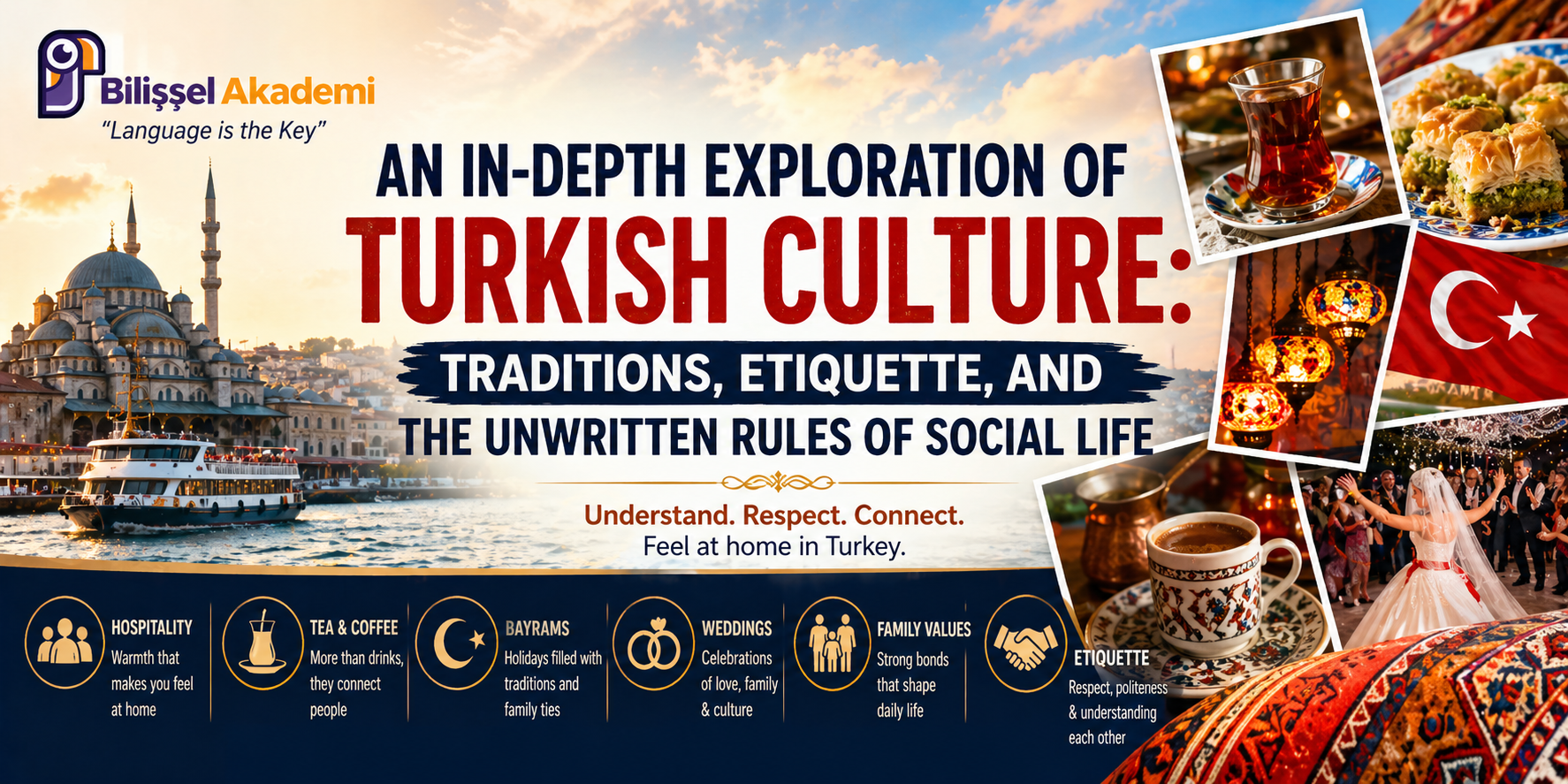
🧿 An In-Depth Exploration of Turkish Culture:
Traditions, Etiquette, and the Unwritten Rules of Social Life
Turkey is a mesmerizing tapestry woven with threads of Eastern traditions and Western modernism. For expats, tourists, and international students, adjusting to life in Turkey goes far beyond learning the grammar of the language or figuring out how to navigate the public transport system. True integration requires decoding the vibrant, deeply rooted, and sometimes complex cultural norms that dictate daily interactions.
Why does your neighbor insist on feeding you an entire feast when you only stopped by to say hello? Why do people pour lemon cologne on your hands during a bus ride? What does it mean when someone says “Kolay gelsin” to a stranger working on the street? These unwritten rules form the heartbeat of Turkish society.
This definitive pillar guide dives deep into the heart of Turkish culture. From the legendary Turkish hospitality (Misafirperverlik) to the sacred rituals of tea and coffee, and from the loud joy of weddings to the respect shown during religious holidays (Bayramlar), we will equip you with everything you need to thrive socially in Turkey.
The Cornerstone: Turkish Hospitality (Misafirperverlik)
In Turkey, a guest is considered a “Guest of God” (Tanrı Misafiri). Hospitality is not just about being polite; it is a profound cultural duty. When you are invited to a Turkish home, you are treated with the utmost respect and generosity.
👟 The Shoe Rule
Never wear your outdoor shoes inside a Turkish home. It is considered highly disrespectful and unhygienic. You will almost always be offered a pair of guest slippers (terlik) at the door.
🍽️ The Food Avalanche
Hosts will offer you copious amounts of food and will likely insist you eat more even after you say you are full. To politely decline without offending, say “Elinize sağlık, çok doydum” (Health to your hands, I am very full) and leave a tiny bit of food on your plate to signal you are done.
🎁 Bringing a Gift
When visiting a home for the first time, never arrive empty-handed. Bringing a box of baklava, chocolates, or flowers is the standard protocol of politeness.
The Lifeblood of the Nation: Tea & Coffee Culture
To understand Turkey, you must understand its beverages. Tea (Çay) and Turkish Coffee (Türk Kahvesi) are not just drinks; they are tools for socialization, negotiation, and bonding.
☕ Turkish Tea (Çay)
Turks consume the most tea per capita in the world. It is served in small, tulip-shaped glasses (ince belli bardak). You will be offered tea after a meal, during a business meeting, or while waiting in a shop. Refusing tea can sometimes be seen as refusing friendship. If you have had enough, simply place your teaspoon horizontally across the top of your tea glass to signal, “No more, thank you.”
🏺 Turkish Coffee (Türk Kahvesi)
Turkish coffee is thick, strong, and unfiltered. It is always served with a glass of water to cleanse the palate. There is a famous Turkish proverb: “Bir fincan kahvenin kırk yıl hatırı vardır” (A cup of coffee commits one to forty years of friendship). After drinking, it is a fun cultural tradition to turn the cup upside down on the saucer and wait for the grounds to cool, so someone can “read your fortune” (Fal bakmak).
Social Etiquette and Unwritten Rules
Mastering these everyday phrases and behaviors will instantly endear you to the locals.
Respect for Elders (Büyüklere Saygı)
Age dictates hierarchy in Turkish social settings. When greeting an elderly person, especially family members or close acquaintances, it is customary to kiss the back of their right hand and touch it to your forehead. You must also offer your seat on public transport to the elderly or pregnant women.
Magic Phrases to Know
- Kolay Gelsin: “May it come easy.” Say this to anyone who is working (a taxi driver, a cashier, or a colleague).
- Afiyet Olsun: “Bon appétit.” Used before, during, or after a meal.
- Geçmiş Olsun: “May it pass.” Say this to someone who is sick or has experienced a misfortune.
- Elinize Sağlık: “Health to your hands.” Used to compliment someone who cooked for you or did manual labor.
Body Language
Pointing the soles of your feet at someone is considered rude. Also, clicking your tongue and raising your eyebrows/chin slightly upwards means “No” (Hayır).
Turkish Weddings (Düğün)
A Turkish wedding is a loud, joyful, and deeply communal affair. If you are invited, prepare for hours of traditional line dancing (Halay) to the sound of drums and zurnas.
- The Convoy (Düğün Konvoyu): The groom’s family picks up the bride in a long line of cars, honking their horns loudly through the streets to announce the joy.
- The Jewelry Ceremony (Takı Merasimi): Guests pin gold coins or money directly onto ribbons worn by the bride and groom as a financial head-start for their new life.
National and Religious Holidays (Bayramlar)
Turkey observes two major Islamic holidays, during which the country practically shuts down to focus on family.
- Ramazan Bayramı (Eid al-Fitr): Often called the “Sugar Feast,” this marks the end of Ramadan fasting. Children kiss the hands of elders and are rewarded with sweets or pocket money (harçlık).
- Kurban Bayramı (Eid al-Adha): The “Feast of the Sacrifice.” It involves the sacrifice of an animal (usually a sheep or cow), and the meat is shared with neighbors, family, and those in need.
Embrace the Culture, Live the Language
Turkish culture is vibrant, deeply emotional, and incredibly welcoming. By learning these unwritten rules and using essential cultural phrases, you show profound respect for the local way of life. The language and the culture are intertwined—you cannot truly master one without embracing the other.
İletişim Bilgileri
Bilişsel Akademi Kızılay Şubesi
📍 Adres: Ziyabey Cad. No: 15/4 (Metro Yanı) Çankaya / ANKARA
📞 Telefon: 0507 653 27 07